Fishing for Caribbean spiny lobster on Florida's coasts
Fishing for Caribbean spiny lobster on Florida's coasts
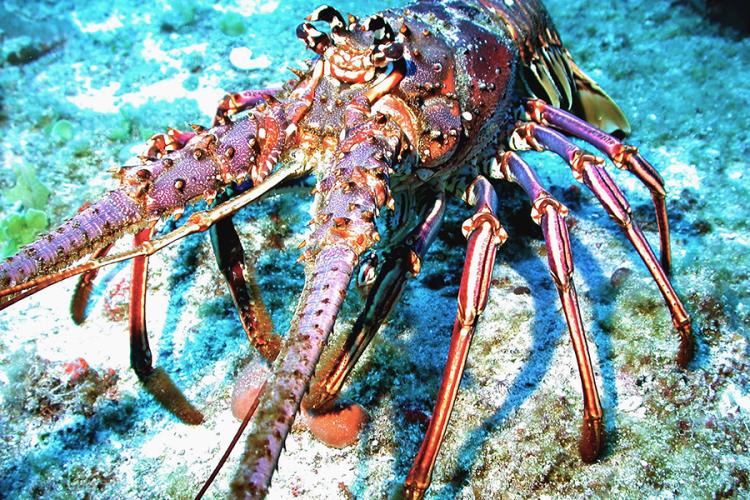
While Florida's terrestrial agriculture, particularly citrus fruit and cane sugar, is the Sunshine State's most famous contributor to the American diet, it is not the only one. Fishing in Florida, both commercial and recreational, is an industry worth $18 billion that supports nearly 200,000 jobs, which range from pleasure boat operators taking people from Ohio to see Nemo up close and personal to the owners of trawlers that haul in large quantities of tropical fish to refrigerate and ship back up to dinner plates in Ohio. And there are few sea creatures more emblematic of the backbone of Florida's fishing industry than lobster. While most of us probably associate "lobstah" with the Northeast and especially the state of Maine, the waters off of Florida are also home to a smaller, warm-water species, the Caribbean spiny lobster, which is fished from August through March and in a short, two-day "mini season" for recreational fishermen shortly before the main season begins. (Their spawning season is from March through August, with the Florida Keys a critical habitat for such, in case you're wondering why lobster season is on the dates that it is.) They live about fifteen years on average and start spawning after one year, and grow to be about fifteen pounds and eighteen inches long. There are three popular methods of catching spiny lobster: diving for them, bully netting, or setting cage traps for them to crawl into. The tail is the juiciest part of the spiny lobster; most "lobster tail" consumed in the US comes from this species, not the larger American lobster found further north.
When it comes to anything having to do with coastal ecosystems in Florida, the question of sustainability and environmental friendliness always comes up, and for once, I have good news: the Caribbean spiny lobster is not being overfished in Florida waters. If anything, their populations have been remarkably healthy in recent years. NOAA tracks four stocks of the spiny lobster in US waters around Florida, Puerto Rico, and the US Virgin Islands, and none of them are believed to be overfished. For this, we can credit the strict regulations put in place on lobster fishing by the federal government, including but not limited to requiring licensing to do so, bag and catch limits, prohibitions on harvesting fertile females, minimum size limits so that they can grow large enough to reproduce before being harvested, bans on the use of spears and hooks, and bans on lobster fishing in certain protected ecosystems. Not all Caribbean countries, however, obey regulations as strict as those of the United States, and in countries where lobster fishing makes up an important component of the subsistence economy, poaching and defiance of regulations are a greater concern. The risk is not just to coastal ecosystems where spiny lobster play a vital role, but also to the livelihoods of fishermen and those supported by their economic and agricultural activity, who face destitution if lobster fisheries were to collapse. The experience of Newfoundland, which plunged into an economic depression in the '90s after the collapse of the northwest Atlantic cod fishery and only recovered when they pivoted to lobster fishing, is illustrative of the importance of sustainable fishing practices and how myopic short-term gain can lead to long-term pain.
(Huh. You see what happens when Tallahassee can't get its way on issues of environmental management or lack thereof?)
So, at this point, my recommendation for the future of the spiny lobster is to keep doing what we've been doing when it comes to regulations on fishing. Emphasize protection of coastal mangroves, as those are a vital spawning site for the spiny lobster and other tropical marine species that is more directly threatened. Assist Caribbean countries where poaching is a problem, so that fewer fishermen feel pressured to break the law in order to (at times literally) put food on the table. And for Lorde's sake, let's keep the relevant federal agencies in charge.


Comments
Post a Comment